NEXAVIAN FLIGHT BRIEF

PERSONAL AIR VEHICLES
Brief ID: NEX-2310
Date: 01-FEB-25
🗺 FLIGHT PLAN
What is it?
Personal Air Vehicles (PAVs) are small, typically electric or hybrid-powered aircraft designed for individual or small-group transport. Unlike commercial eVTOL taxis or business jets, PAVs focus on personal ownership, recreation, and short-range private mobility. Forms of PAVs include:
- Two-to-four seat electric VTOL aircraft
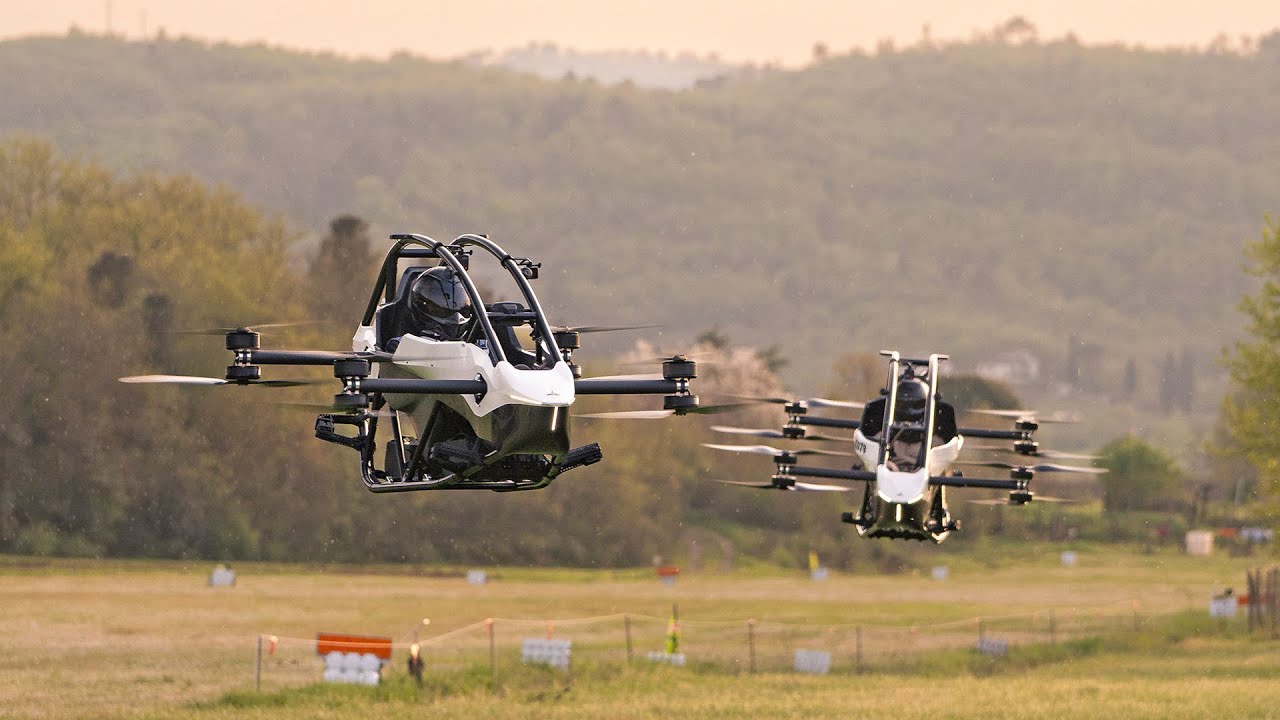
- Hoverbikes / Hoverboard concepts – single-seat ultralights or jet-powered “flying bikes”
- Ultralight airframes – urban or recreational flyers
Often branded as the “flying cars” of the future, PAVs are envisioned for private ownership or shared club networks, enabling individuals to experience aviation on-demand.
 ATIS - ADVISORY
- Certification & Safety remain the highest barriers; PAVs must prove reliability before mass adoption.
- Noise & privacy concerns will affect acceptance in suburban/urban cores.
- Ownership vs. Sharing Models: Most people may access via flying clubs or subscription fleets, not personal ownership.
- STEM & Innovation Impact: PAVs are powerful incubators for autonomy, energy systems, and public imagination.
 FLIGHT ROUTE
How does it work?
PAVs operate through electric or hybrid propulsion systems combined with VTOL (Vertical Take-Off and Landing) capability and increasingly autonomous flight control. Typical flight path phases:
➡️ Departure – Personal Launch Sites
Rooftops, vertipads, suburban yards, or rural clearings. Designed for accessibility without airports
➡️ Waypoint 1 – Lift & Stabilization
Distributed electric propulsion provides vertical lift. Fly-by-wire systems and stabilization software keep control intuitive
➡️ Waypoint 2 – Cruise
Small fixed wings or vectored thrust enable short to medium-range flight. Lightweight composites optimize efficiency
➡️ Waypoint 3 – Energy Systems
Battery-electric with rapid charging pads or hybrid fuel-cell configurations. On-demand recharging or refueling for quick turnarounds
➡️ Arrival – Personal or Shared Vertipads
Land close to home, work, or recreational sites. Integrated with basic digital air traffic systems for deconfliction
👩✈️CREW NOTES
NexAvian Insights
(What to expect in 5–10 years)
- Certified 2–4 seat PAVs available for private pilots
- Growth of airbike-style ultralights for recreational use
- Semi-autonomous personal craft operating in suburban/rural areas
- Early integration with digital UTM systems
- Development of aerial driver’s licenses or simplified pilot training frameworks
- Adoption mainly in niche, recreational, and high-net-worth markets
 PRE-FLIGHT CHECK
PAVs promise to democratize flight—making air mobility as personal as driving:
✅Commute bypass: Escape ground congestion for faster point-to-point travel
✅ Accessibility: Opens mobility in rural, island, or remote regions
✅ Innovation driver: Pushes progress in lightweight design, autonomy, and batteries
✅ New models: Subscription “air clubs” or leasing schemes for the everyday flyer
PAVs bridge the gap between recreational ultralights and commercial AAM networks.
✈CLEARED FOR TAKE-OFF
📞 Talk to NexAvian
PAVs are more than science fiction—they are the personal frontier of Advanced Air Mobility. With roots in both futuristic vision and practical aerospace engineering, they may soon allow individuals to own or access flying cars in their lifetime.
Speak with NexAvian today to explore how to position your business or investments to capture opportunities in this evolving space.